


AI Is Confidently Wrong About Visa Sponsorship — Here's the Proof
- Student Circus
- Jun 3
- 2 min read

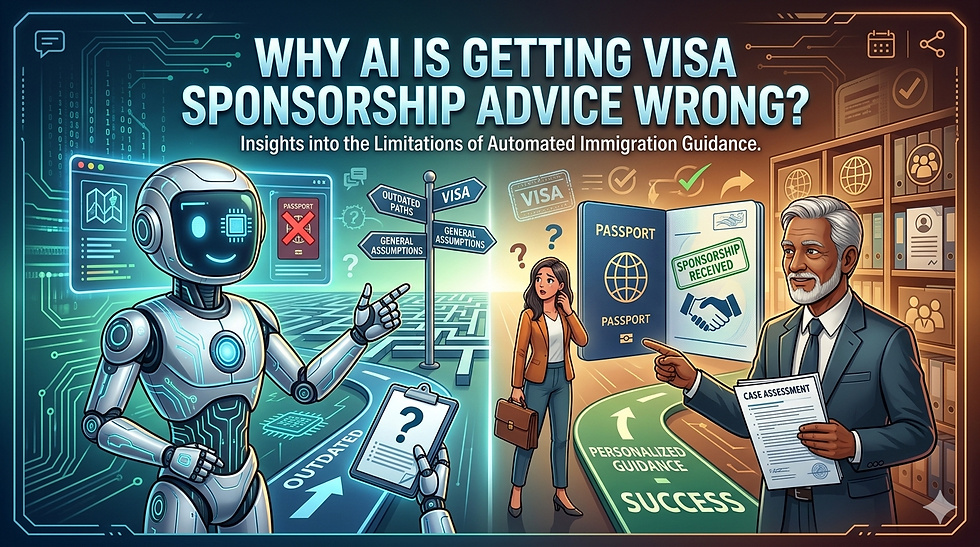
Let's establish something clearly: AI tools are genuinely valuable in the job search process. They help with resume optimization, interview preparation, industry research, and cover letter drafting. This article is not an argument against AI.
It is, however, a direct challenge to one increasingly common use case: using AI to generate verified lists of visa-sponsoring employers.
The Structural Problem
Large language models like ChatGPT, Claude, and Gemini are trained on static datasets. Once training is complete, the model's knowledge does not update unless a new version is released. In practical terms, this means that when you ask an AI for H-1B or Tier 2 sponsoring companies, it is drawing from data that could be anywhere from 6 months to several years old.
In most domains, that lag is acceptable. In visa sponsorship, it isn't.
Sponsorship decisions are among the most volatile elements in corporate hiring. They respond to macroeconomic conditions, leadership strategy, government policy, and internal HR directives. A company's publicly documented sponsorship history — which forms the basis of AI training data — may be entirely disconnected from its current willingness to sponsor applicants.
What the Data Actually Shows
According to Student Circus's original investigation into this phenomenon, students regularly discover that companies on AI-generated lists have:
Explicitly paused all sponsorship during the current hiring cycle
Changed internal policy to restrict sponsorship to senior-level roles only
Never sponsored the specific visa category the student requires
Closed applications entirely due to restructuring or economic contraction
The verification gap is real and measurable. And it disproportionately affects the most vulnerable applicants — those already stretched thin managing visa timelines and limited application windows.
A Framework Professionals Should Share With Students
For HR professionals, career advisors, and university employability teams working with international students, here's a clear recommended framework:
AI for breadth — use generative tools to surface sectors, roles, and employers worth researching
Government data for foundation — USCIS H-1B disclosure data and UK Tier 2 sponsor registers are public and searchable
Recruiter confirmation for precision — always verify sponsorship willingness before investing significant application effort
Specialist platforms for efficiency — tools like Student Circus exist specifically to surface verified employer intent for international candidates
The full analysis behind this framework is available here: Why AI Is Getting Visa Sponsorship Advice Wrong
Sharing this with even one international student could save them weeks of misdirected effort.


Comments